LAOS-KOREA
WORLD
HERITAGE
CULTURAL HUB
Adaptive Reuse of Decommissioned Restoration Aid Facilities Into A Sustainable Cultural Ecosystem For Community-Driven Revitalization
Client | Korea Heritage Agenc
Project Coordinator | Yugun Chun, Goeun Lee
Design Principal | Jeeun Lee
Project Team | Juhang Cha, Eungyo Hur
︎
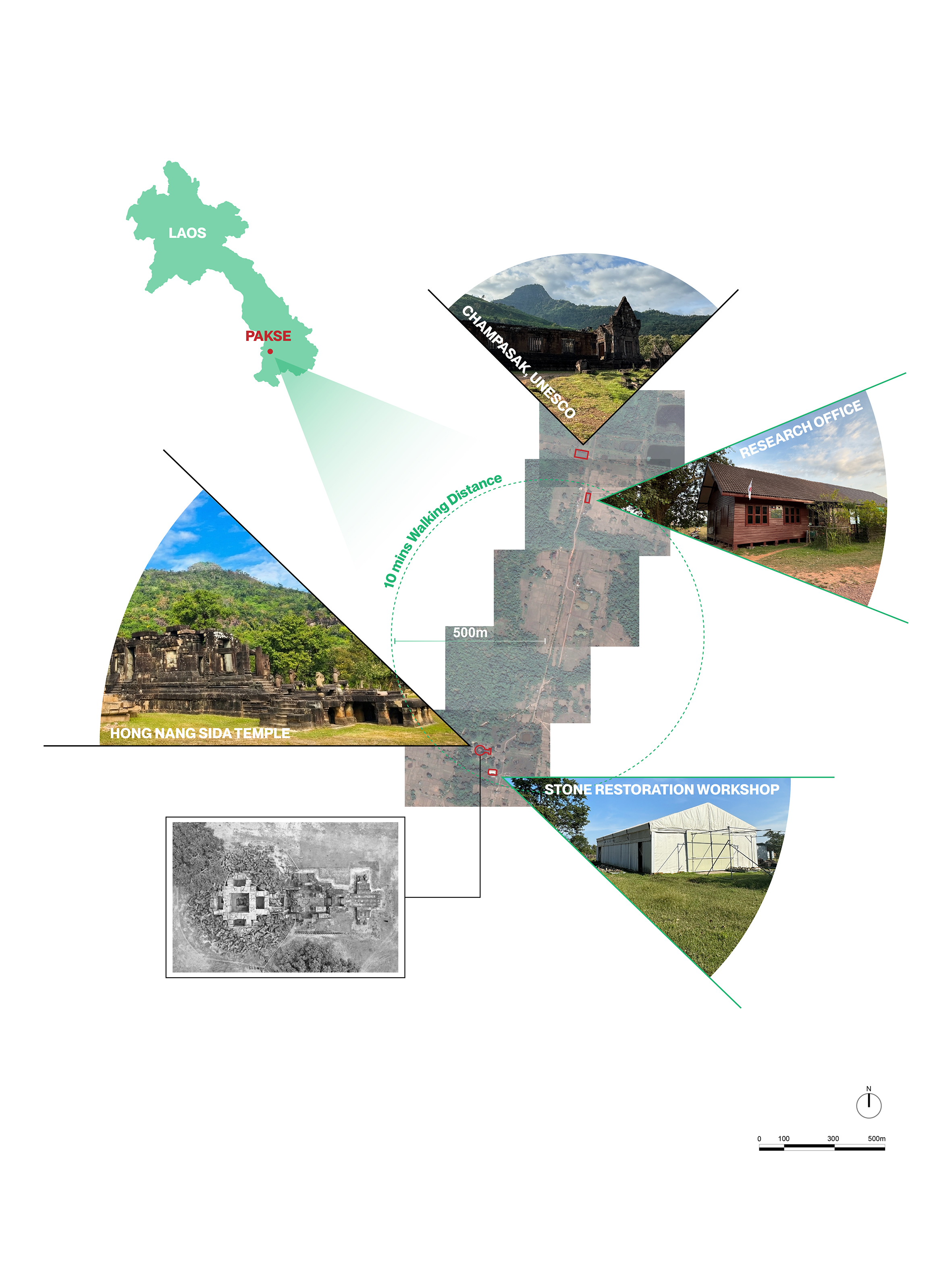
라오스 남부 팍세에 위치한 유네스코 세계유산 '와푸-참파삭 문화경관' 내에는, 대한민국 최초의 공적개발원조(Official Development Assistance) 해외 문화유산 복원 사례인 홍낭시다 사원이 자리하고 있다. 11세기 힌두교 사원이자 앙코르와트의 건축적 기원으로 알려져 있으며, 10년에 걸친 복원기간을 통해 현재의 모습으로 재탄생하였다.
그러나 국가유산진흥원(Korea Heritage Agency)의 복원 사업이 완료되고 연구진이 철수함에 따라, 홍낭시다 사원은 두 가지 당면 과제에 직면했다.
첫째, 주요 유적지인 와푸(Vat Phou) 사원과 첨파삭(Champasak) 주거단지에 비해 인지도가 낮고 지리적 접근성이 떨어져 방문객의 유입이 저조하며, 둘째, 전문가 철수 이후 복원된 유산을 지속적으로 유지·관리할 주체와 시스템이 부재하다는 점이다.
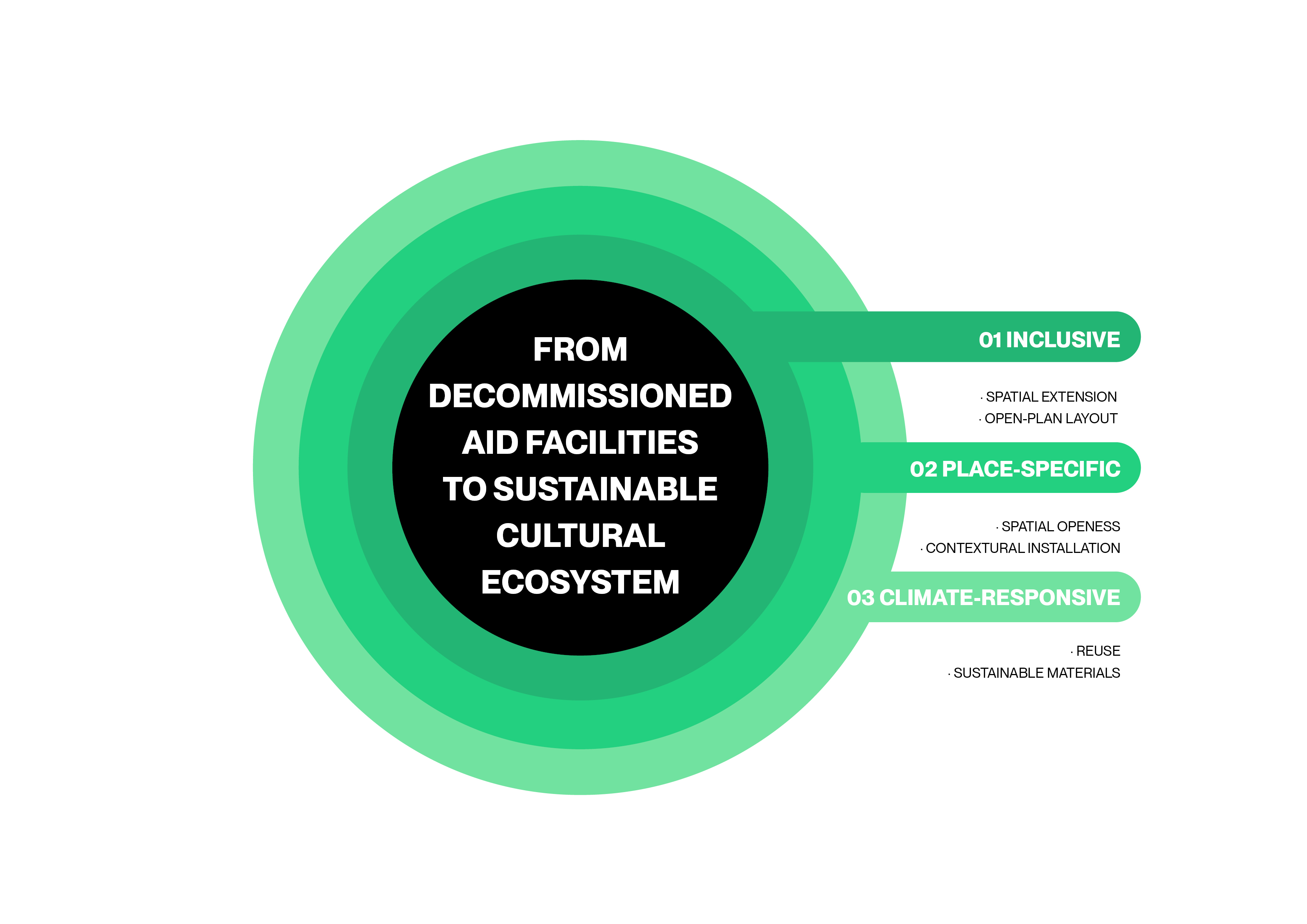
이에 본 프로젝트는 소임을 다한 현장 지원 시설인 ‘연구원 사무실’과 ‘석재 보존 처리장’을 전시 및 커뮤니티 공간으로 변모시키는 적응형 재사용을 제안하였다. 이는 홍낭시다 사원의 홍보와 상시 관리를 도모하고, 나아가 지역의 자생력을 강화하여 지속 가능한 지역 발전 모델을 구축하기 위함이다.
Hong Nang Sida Temple is located within the UNESCO World Heritage 'Vat Phou-Champasak Cultural Landscape' in Pakse, southern Laos, and stands as Korea’s first overseas heritage restoration project via ODA(Official Development Assistance). Known as the architectural prototype of Angkor Wat, this 11th-century Hindu temple has been reborn to its current state after a 10-year restoration period.
However, following the completion of the Korea Heritage Agency restoration project and the withdrawal of the research team, Hong Nang Sida Temple faced two critical challenges.
First, compared to the main sites such as Vat Phou and Champasak, it suffers from low public awareness and geographical isolation, resulting in limited visitor inflow. Second, there is an absence of a management entity and system to maintain the restored heritage after the experts' departure.
In response, this project proposes the adaptive reuse of decommissioned aid facilities, including the research office and the stone restoration workshop, transforming them into exhibition and community spaces. This initiative aims to facilitate site promotion and ongoing management, ultimately empowering local self-reliance to establish a sustainable model for regional development.
라오스 남부 팍세에 위치한 유네스코 세계유산 '와푸-참파삭 문화경관' 내에는, 대한민국 최초의 공적개발원조(Official Development Assistance) 해외 문화유산 복원 사례인 홍낭시다 사원이 자리하고 있다. 11세기 힌두교 사원이자 앙코르와트의 건축적 기원으로 알려져 있으며, 10년에 걸친 복원기간을 통해 현재의 모습으로 재탄생하였다.
그러나 국가유산진흥원(Korea Heritage Agency)의 복원 사업이 완료되고 연구진이 철수함에 따라, 홍낭시다 사원은 두 가지 당면 과제에 직면했다.
첫째, 주요 유적지인 와푸(Vat Phou) 사원과 첨파삭(Champasak) 주거단지에 비해 인지도가 낮고 지리적 접근성이 떨어져 방문객의 유입이 저조하며, 둘째, 전문가 철수 이후 복원된 유산을 지속적으로 유지·관리할 주체와 시스템이 부재하다는 점이다.
이에 본 프로젝트는 소임을 다한 현장 지원 시설인 ‘연구원 사무실’과 ‘석재 보존 처리장’을 전시 및 커뮤니티 공간으로 변모시키는 적응형 재사용을 제안하였다. 이는 홍낭시다 사원의 홍보와 상시 관리를 도모하고, 나아가 지역의 자생력을 강화하여 지속 가능한 지역 발전 모델을 구축하기 위함이다.
Hong Nang Sida Temple is located within the UNESCO World Heritage 'Vat Phou-Champasak Cultural Landscape' in Pakse, southern Laos, and stands as Korea’s first overseas heritage restoration project via ODA(Official Development Assistance). Known as the architectural prototype of Angkor Wat, this 11th-century Hindu temple has been reborn to its current state after a 10-year restoration period.
However, following the completion of the Korea Heritage Agency restoration project and the withdrawal of the research team, Hong Nang Sida Temple faced two critical challenges.
First, compared to the main sites such as Vat Phou and Champasak, it suffers from low public awareness and geographical isolation, resulting in limited visitor inflow. Second, there is an absence of a management entity and system to maintain the restored heritage after the experts' departure.
In response, this project proposes the adaptive reuse of decommissioned aid facilities, including the research office and the stone restoration workshop, transforming them into exhibition and community spaces. This initiative aims to facilitate site promotion and ongoing management, ultimately empowering local self-reliance to establish a sustainable model for regional development.
1. Hong Nang Sida Visitor Center
From Decommissioned Office To Strategic Cultural Gateway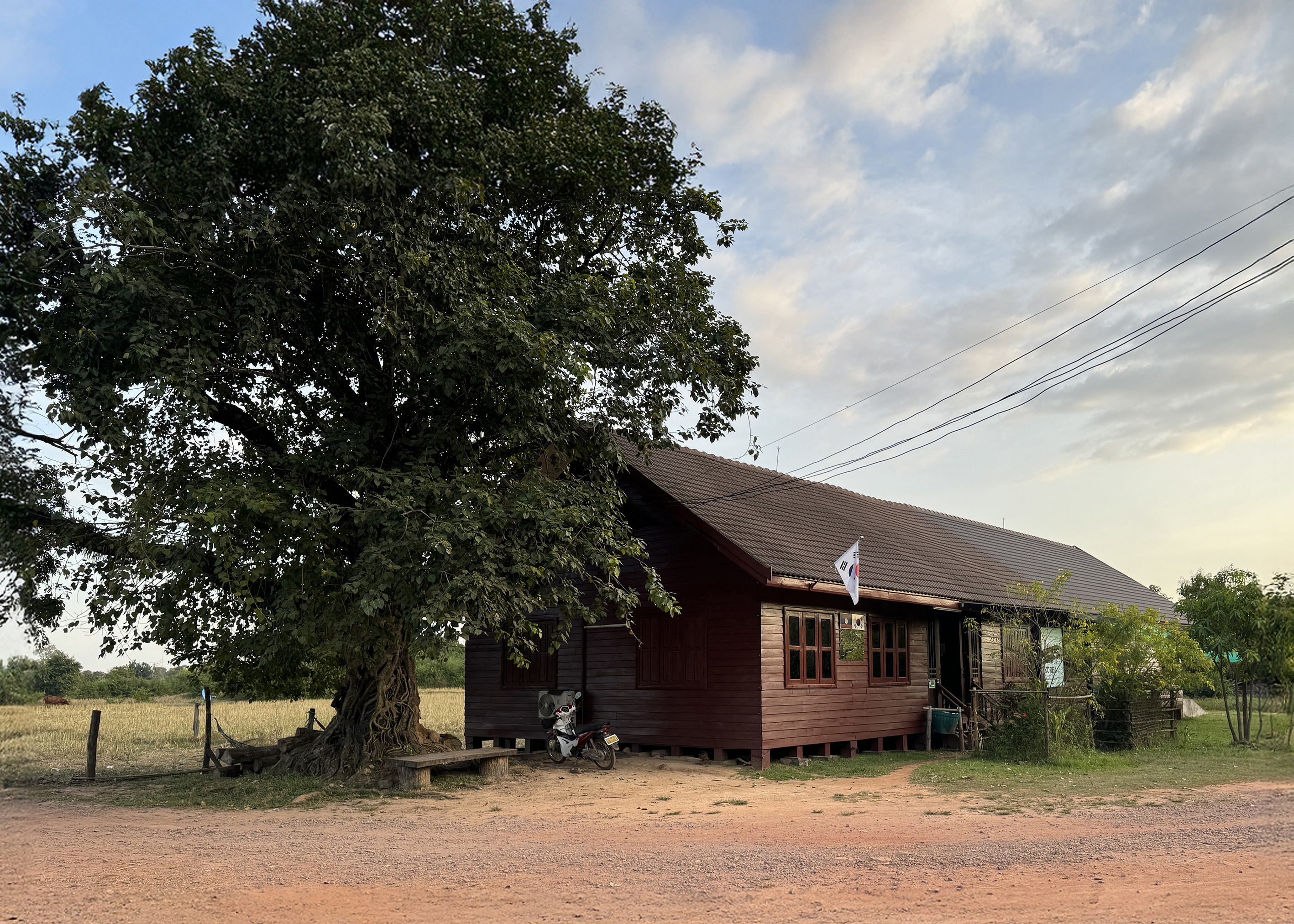
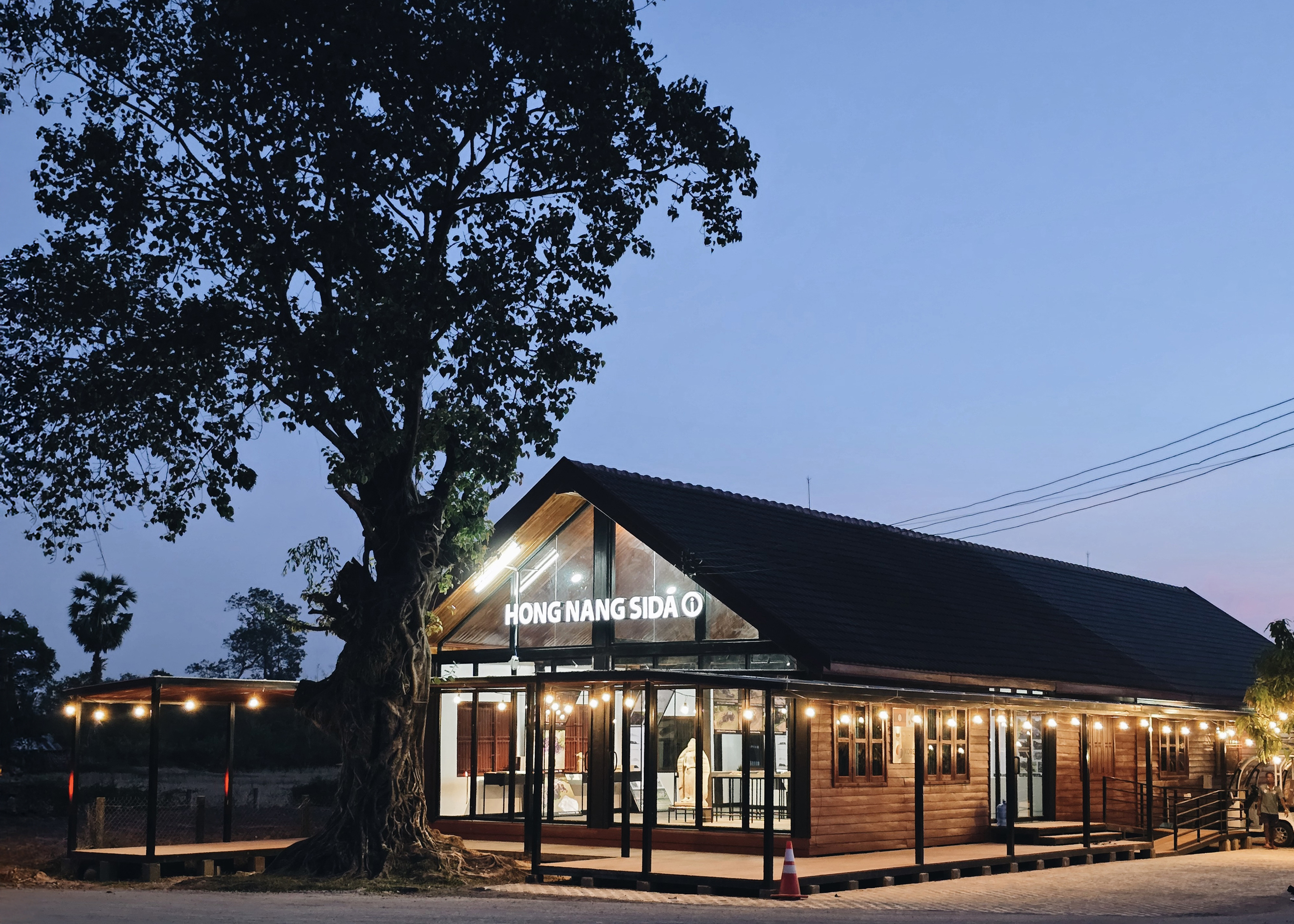

연구원 사무실을 리모델링하여 만든 ‘방문자 허브’는 지리적으로 접근성이 낮은 홍낭시다 사원으로 방문객을 유도하는 안내 거점이자, 복원 이후 유산의 지속적인 관리와 운영을 위한 지역 주민들의 자립 공간으로 계획되었다.
이에 따라 리모델링 설계는 장소성과 포용성, 기후 적응성 강화에 주안점을 두었다. 단순한 정보 전달 기능을 넘어, 관광객과 지역 주민들이 자연스럽게 교류하며 활력을 불어넣는 매력적인 홍보 및 관리 거점을 조성하고자 하였다.
Repurposed from the former research office, the ‘Hong Nang Sida Visitor Center’ serves as a strategic signpost guiding visitors to this geographically isolated ancient temple, while functioning as a base for self-reliance to empower locals in the sustainable management of the heritage post-restoration.
To this end, the renovation focuses on capturing a sense of place, fostering inclusivity, and adapting to the local climate. Beyond simply delivering information, the goal is to create an engaging promotional and management hub that breathes life into the area by encouraging natural interaction between tourists and residents.
이에 따라 리모델링 설계는 장소성과 포용성, 기후 적응성 강화에 주안점을 두었다. 단순한 정보 전달 기능을 넘어, 관광객과 지역 주민들이 자연스럽게 교류하며 활력을 불어넣는 매력적인 홍보 및 관리 거점을 조성하고자 하였다.
Repurposed from the former research office, the ‘Hong Nang Sida Visitor Center’ serves as a strategic signpost guiding visitors to this geographically isolated ancient temple, while functioning as a base for self-reliance to empower locals in the sustainable management of the heritage post-restoration.
To this end, the renovation focuses on capturing a sense of place, fostering inclusivity, and adapting to the local climate. Beyond simply delivering information, the goal is to create an engaging promotional and management hub that breathes life into the area by encouraging natural interaction between tourists and residents.
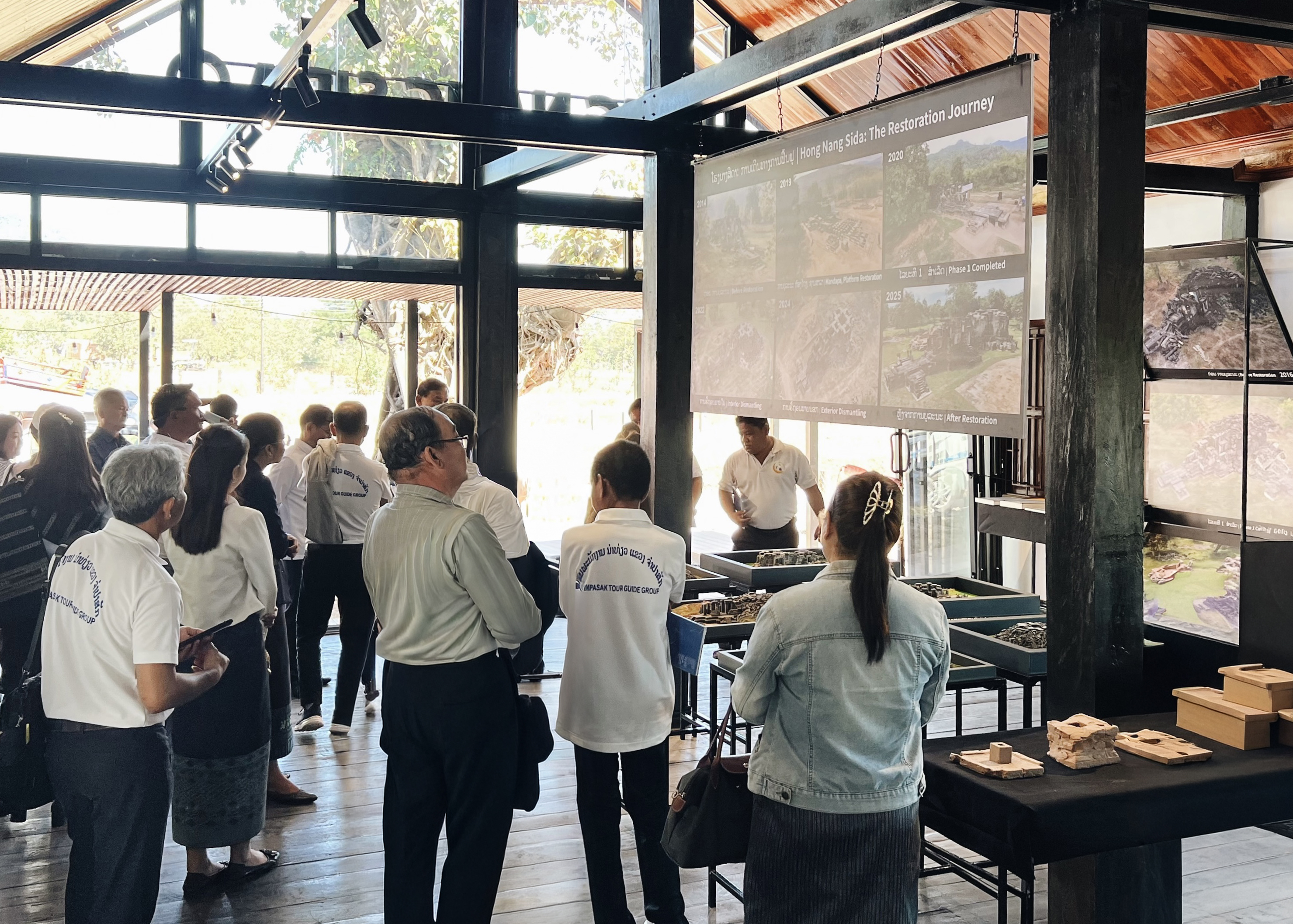

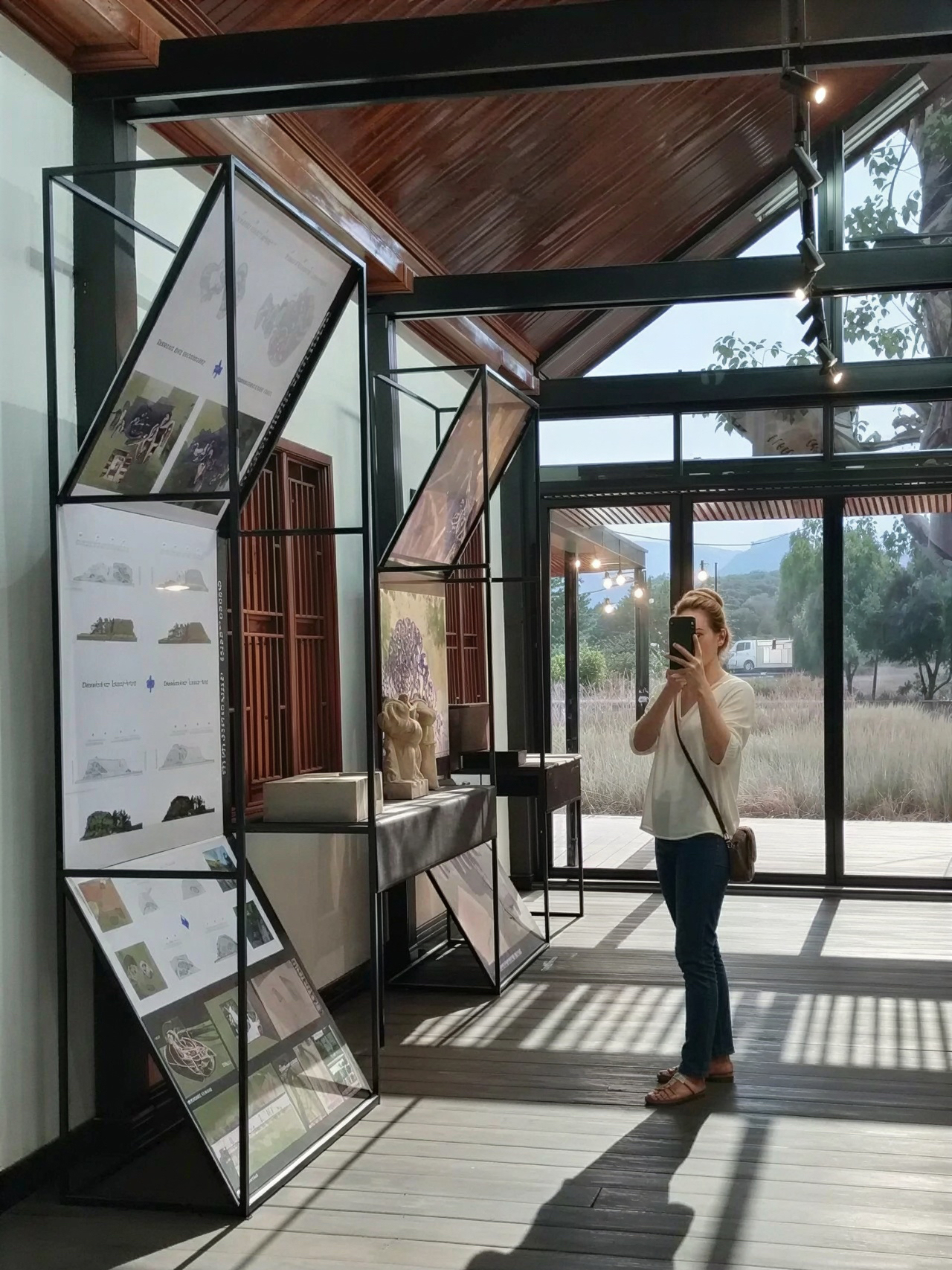
먼저 주출입구를 기준으로 좌측에 위치한 전시공간은 북측 외벽을 허물어 아름다운 경관을 실내로 끌어들였으며, 천장과 사무실 실내 마감재를 제거해 박공 지붕 구조와 목재 마감을 노출시켜 방문객이 라오스 고유의 지역성(Vernacularity)에 온전히 몰입하도록 하였다.
이어 측면 벽과 중앙 기둥을 전시 영역으로 활용하여 개방감을 극대화하였다. 전시 프로그램은 1.홍낭시다 역사 > 2.복원 과정 > 3.복원 유물 순으로 배치하여 자연스러운 관람 동선을 구축하였으며, 마지막에는 관람 소감을 공유할 수 있는 거울 소재의 포토월을 설치해 체험형 컨텐츠를 제공하고 공간 확장 효과를 함께 도모하였다.
First, for the exhibition space located to the left of the main entrance, by removing the north exterior wall to invite the landscape in and stripping back the ceiling to reveal the gable roof structure and wooden finishes, the interior space immerses visitors in Laos’s local context.
Utilizing side walls and central columns as exhibition surfaces maximizes spatial openness. The program is organized in the sequence of 'Hong Nang Sida History,' 'Restoration Process,' and 'Restored Artifacts' to facilitate a natural storytelling flow. Finally, a 'Mirror Photo Wall' at the end of the circulation allows visitors to share their impressions, simultaneously providing interactive content and a visual spatial extension effect.
이어 측면 벽과 중앙 기둥을 전시 영역으로 활용하여 개방감을 극대화하였다. 전시 프로그램은 1.홍낭시다 역사 > 2.복원 과정 > 3.복원 유물 순으로 배치하여 자연스러운 관람 동선을 구축하였으며, 마지막에는 관람 소감을 공유할 수 있는 거울 소재의 포토월을 설치해 체험형 컨텐츠를 제공하고 공간 확장 효과를 함께 도모하였다.
First, for the exhibition space located to the left of the main entrance, by removing the north exterior wall to invite the landscape in and stripping back the ceiling to reveal the gable roof structure and wooden finishes, the interior space immerses visitors in Laos’s local context.
Utilizing side walls and central columns as exhibition surfaces maximizes spatial openness. The program is organized in the sequence of 'Hong Nang Sida History,' 'Restoration Process,' and 'Restored Artifacts' to facilitate a natural storytelling flow. Finally, a 'Mirror Photo Wall' at the end of the circulation allows visitors to share their impressions, simultaneously providing interactive content and a visual spatial extension effect.
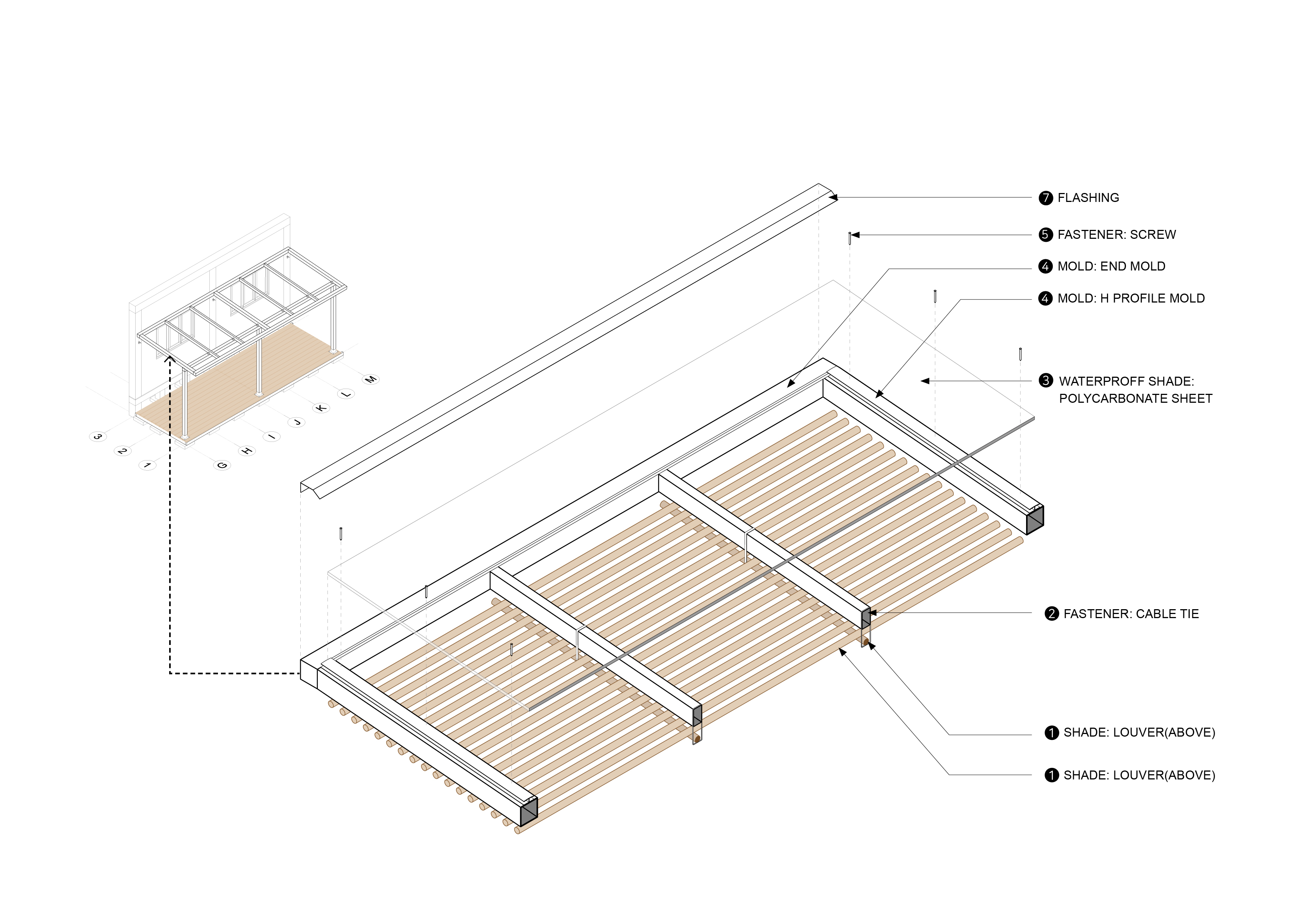
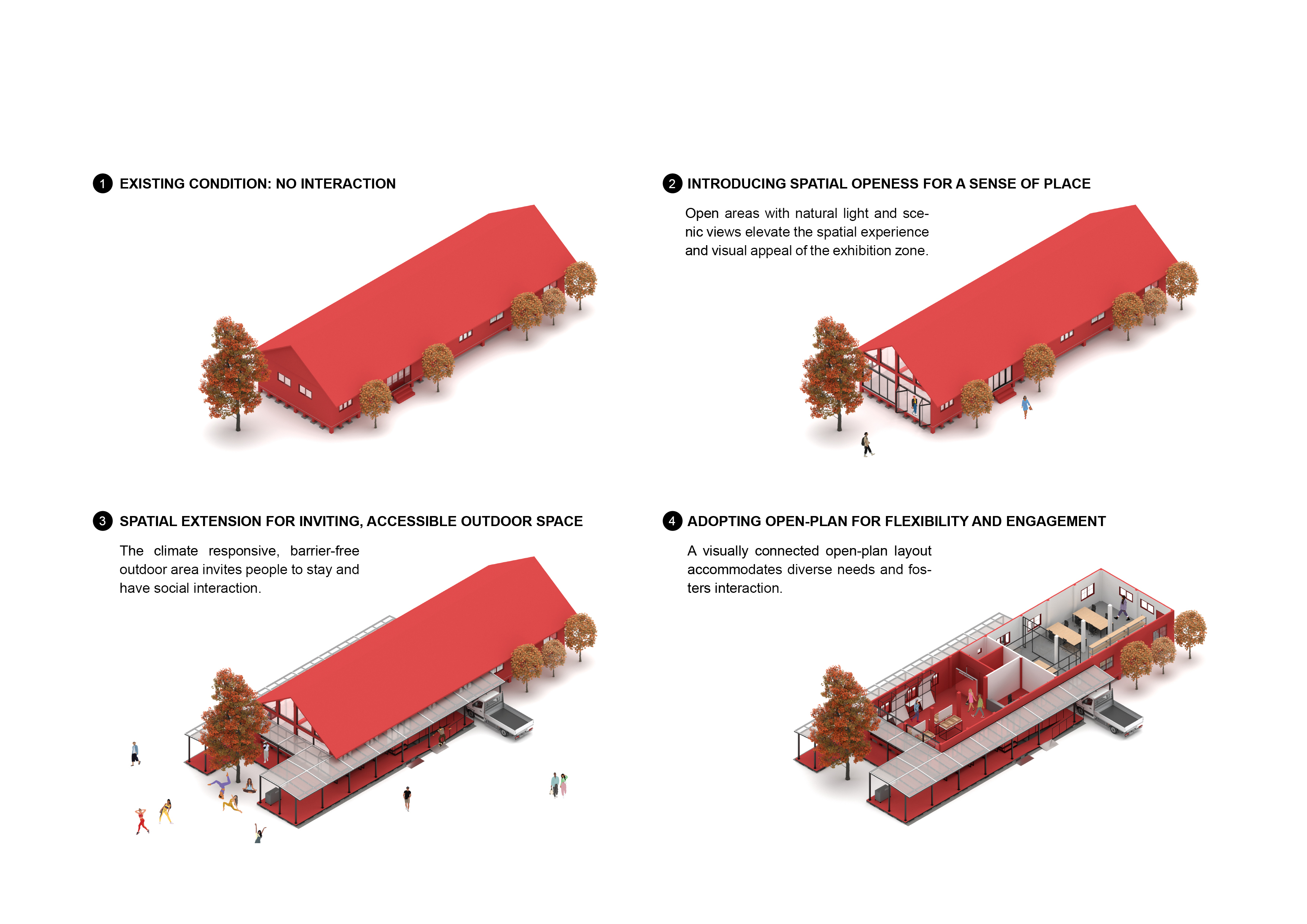
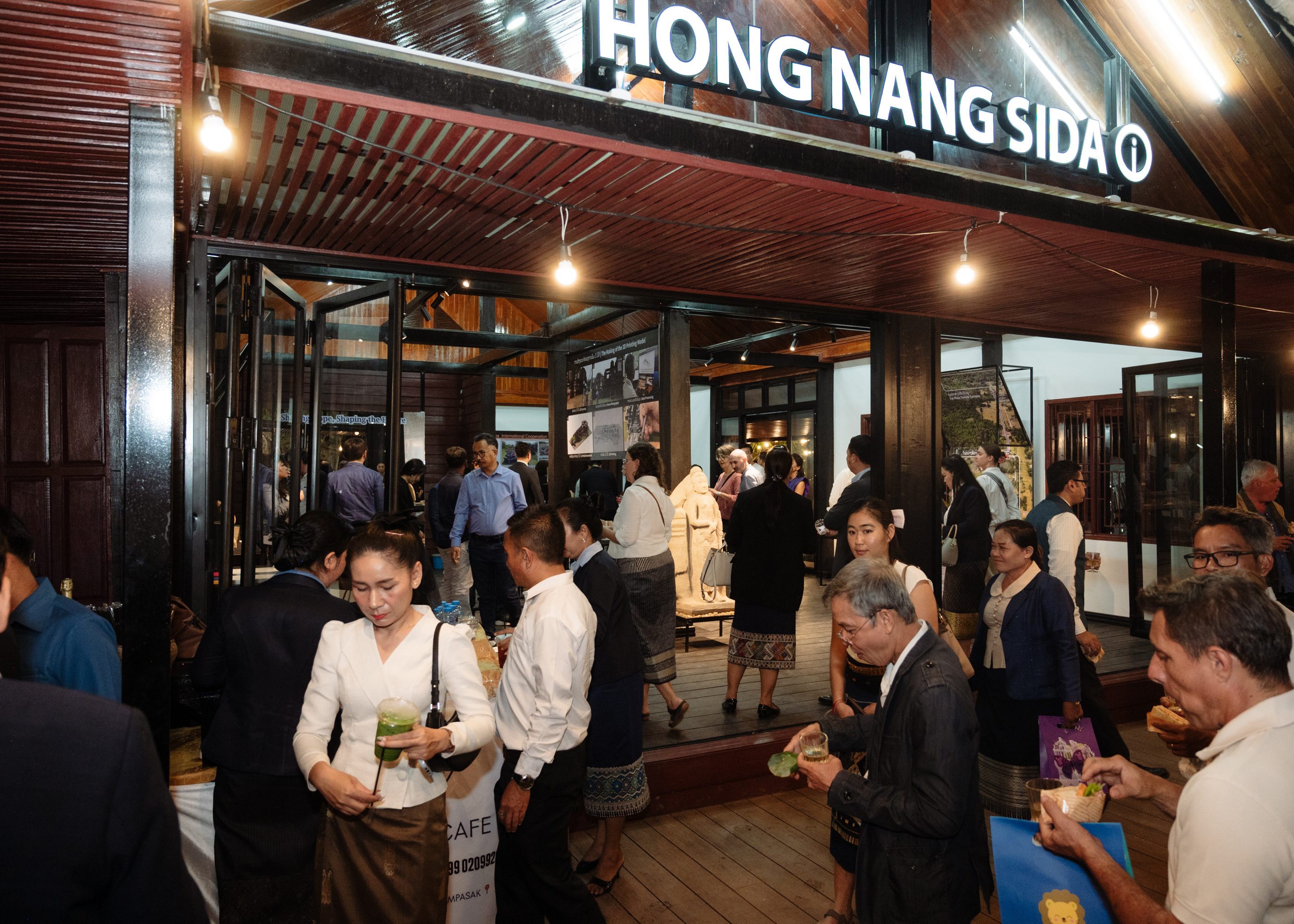
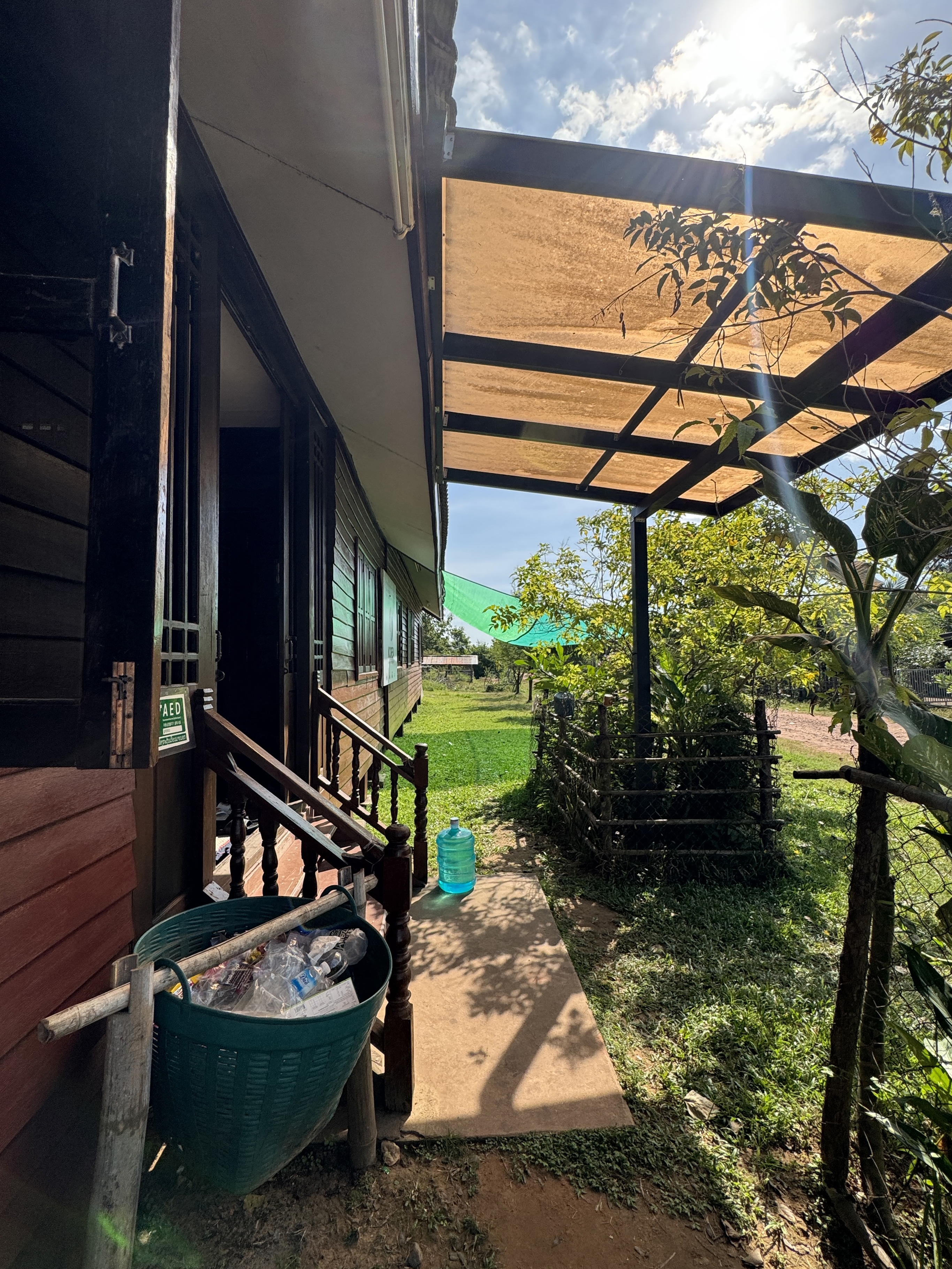
또한, 데크와 파고라를 통해 공간을 확장하고 서측 진입부에는 램프를 신설하여 보편적 접근이 가능한 반외부 휴게공간을 조성하였다. 이를 통해 열대 기후 환경에서도 관광객과 주민이 쾌적하게 머물며 교류할 수 있는 매력적인 장소를 구현하였다.
Additionally, the spatial extension via a deck and pergola, combined with a new ramp at the western entrance, creates a universally accessible semi-outdoor rest area, forming an inviting place for visitors and locals to comfortably linger and socialize in the tropical climate.
Additionally, the spatial extension via a deck and pergola, combined with a new ramp at the western entrance, creates a universally accessible semi-outdoor rest area, forming an inviting place for visitors and locals to comfortably linger and socialize in the tropical climate.


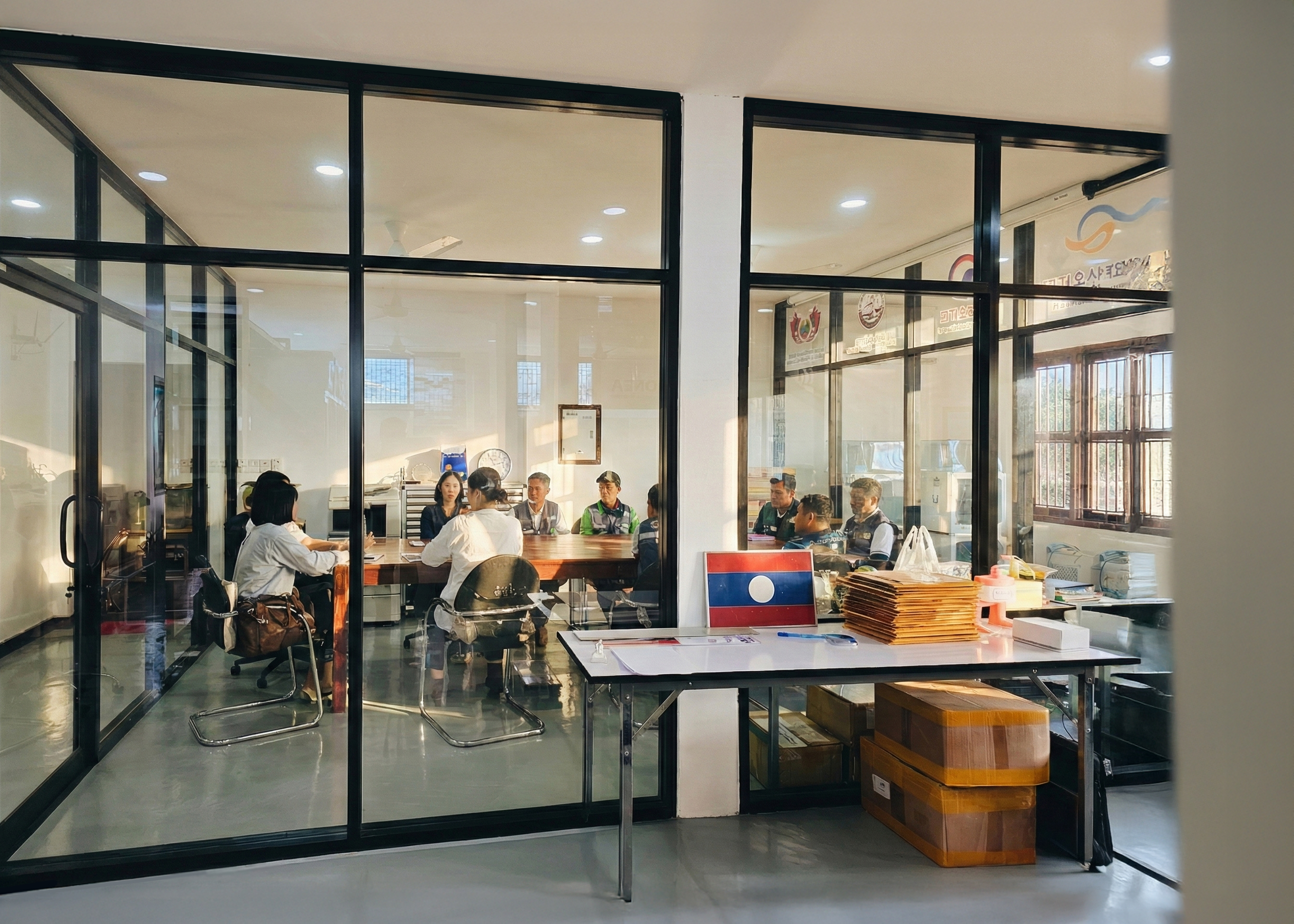
우측에 위치한 오픈형 사무공간은, 가벽을 모두 철거하고 유연한 개방형 레이아웃을 적용해 주민들의 다양한 커뮤니티 활동을 수용하는 지속 가능한 플랫폼이 되도록 계획하였다.
Featuring a flexible open layout created by stripping away all partitions, the open office space on the right functions as a sustainable platform for various community activities.
Featuring a flexible open layout created by stripping away all partitions, the open office space on the right functions as a sustainable platform for various community activities.
2. Stone Hospital Gallery
From Stone Restoration Workshop To In-situ Archive

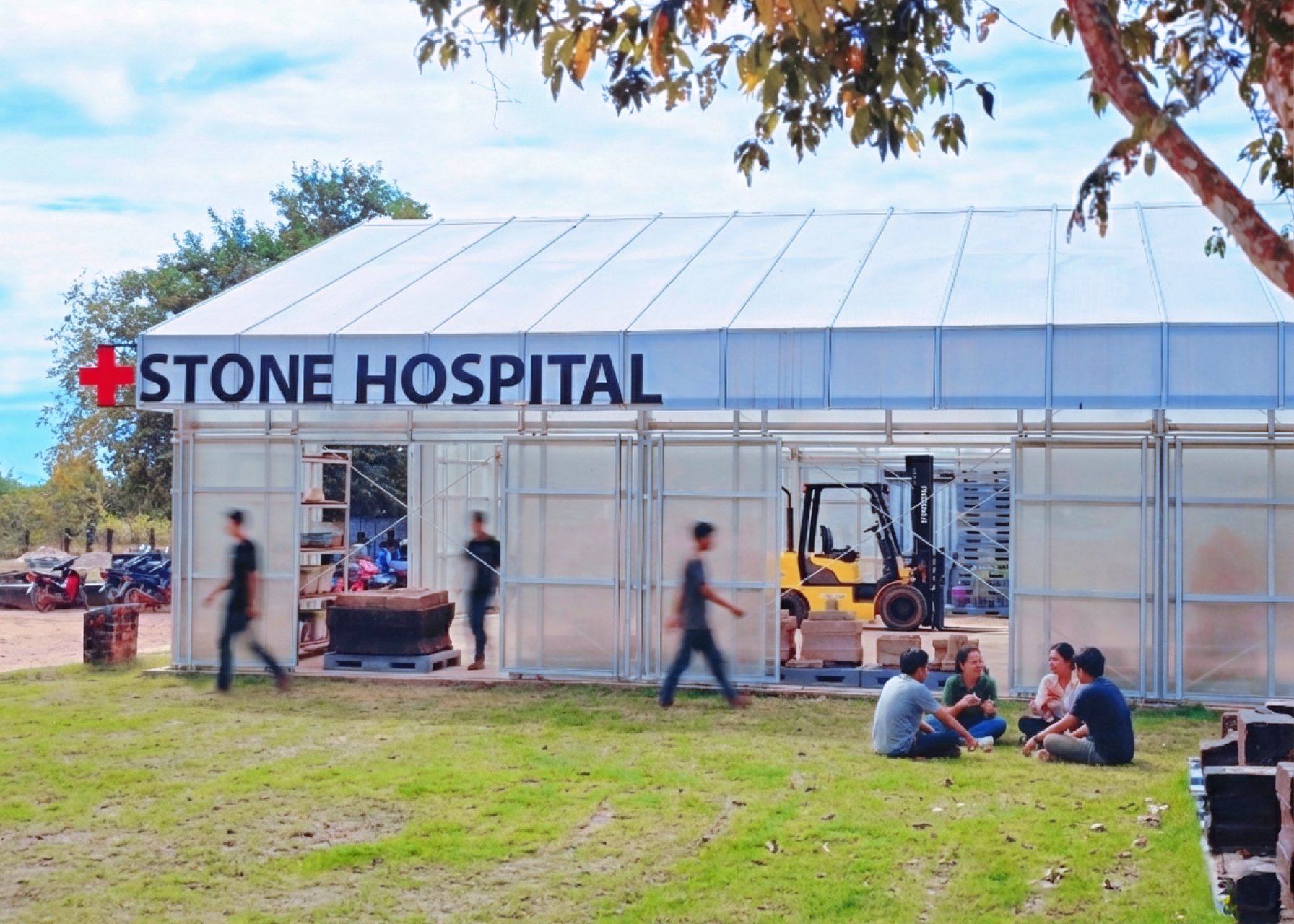
석재보존처리장을 리모델링하여 만든 ‘돌 병원 갤러리’는 과거와 현재의 시간을 잇고, 복원된 유산을 살아있는 서사의 공간으로 재탄생시킨 개방형 수장고이다.
따라서 설계의 핵심은 내구성과 장소성을 향상하여, 뜨거운 햇살과 비바람으로부터 유물을 보호하는 견고한 쉘터이자, 관람객이 복원의 현장감을 몰입감있게 경험하는 전시 공간을 조성하고자 하였다.
The 'Stone Hospital Gallery,' formerly a stone restoration workshop, is an open storage facility that bridges the past and present, transforming restored heritage into a living narrative.
The remodeling design for the stone restoration workshop focused on enhancing durability and placeness. It functions as a resilient shelter protecting artifacts from harsh weather, while simultaneously serving as an immersive exhibition space where visitors can experience the vivid reality of the restoration process.
따라서 설계의 핵심은 내구성과 장소성을 향상하여, 뜨거운 햇살과 비바람으로부터 유물을 보호하는 견고한 쉘터이자, 관람객이 복원의 현장감을 몰입감있게 경험하는 전시 공간을 조성하고자 하였다.
The 'Stone Hospital Gallery,' formerly a stone restoration workshop, is an open storage facility that bridges the past and present, transforming restored heritage into a living narrative.
The remodeling design for the stone restoration workshop focused on enhancing durability and placeness. It functions as a resilient shelter protecting artifacts from harsh weather, while simultaneously serving as an immersive exhibition space where visitors can experience the vivid reality of the restoration process.


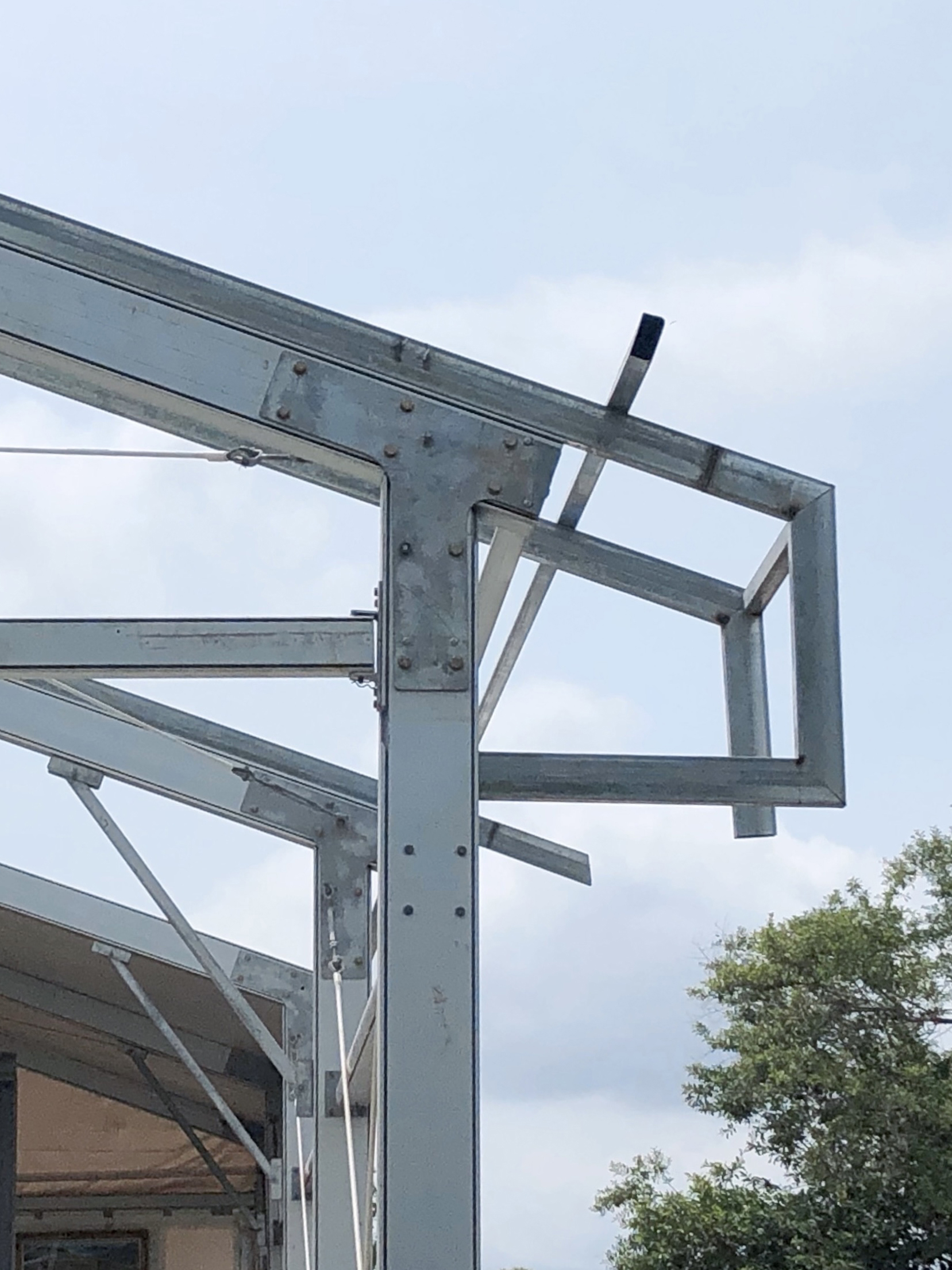
이를 위해 강도와 내열성이 뛰어난 폴리카보네이트를 새로운 외피 재료로 활용하였다. 특히 기존 골조를 연장해 처마 구조를 만들고, 처마의 후면 외피는 개방함으로써 차양과 배수는 물론 자연 환기 성능까지 모두 개선하였다.
To achieve this, high-strength, heat-resistant polycarbonate was selected as the new cladding. Specifically, extending the existing frame to create eaves and opening the rear profile significantly enhance shading, drainage, and natural ventilation.
To achieve this, high-strength, heat-resistant polycarbonate was selected as the new cladding. Specifically, extending the existing frame to create eaves and opening the rear profile significantly enhance shading, drainage, and natural ventilation.
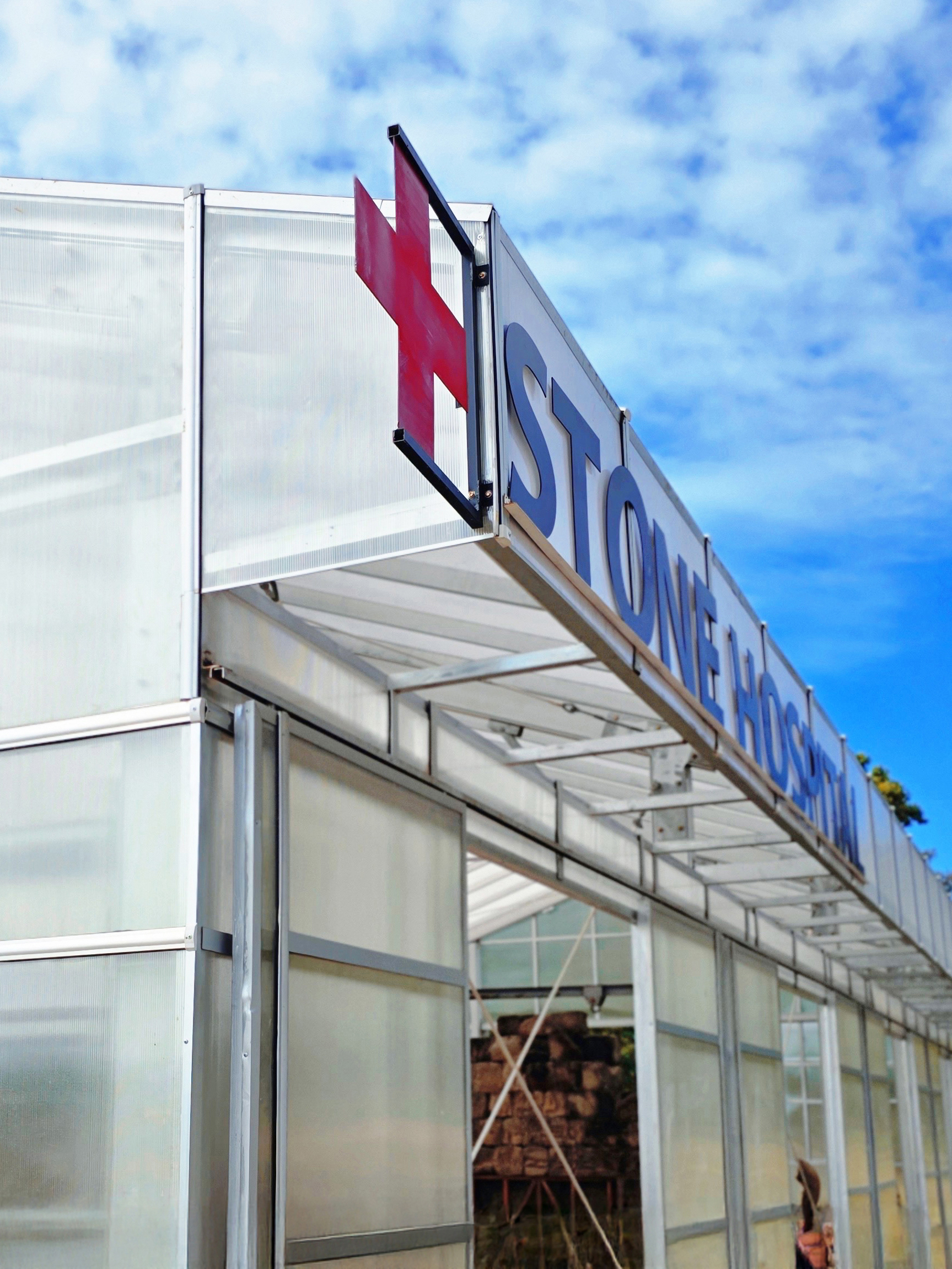
백색의 반투명한 물성은 석재 보존 처리장으로서의 기억을 환기시키고, 치유와 회복의 장소성을 시각적으로 구현한다. 주변 풍경을 은은하게 투과시키는 슬라이딩 도어는 외부 유적지와 끊임없는 시각적 교감을 가능하게 하며, 실제 복원 작업에 사용된 석재 조립 장치를 전시 좌대 및 의자로 업사이클링하여 현장감을 불어넣는 동시에 폐기물 발생을 최소화하였다.
The white translucent materiality evokes memories of the stone restoration workshop, visually realizing the placeness of healing and recovery. Through sliding doors, which gently filter the surrounding landscape, visitors experience a continuous visual dialogue with the external historic site. Furthermore, upcycling stone assembly equipment from the actual restoration process into exhibition pedestals and benches instills a vivid sense of presence while simultaneously minimizing waste generation.
The white translucent materiality evokes memories of the stone restoration workshop, visually realizing the placeness of healing and recovery. Through sliding doors, which gently filter the surrounding landscape, visitors experience a continuous visual dialogue with the external historic site. Furthermore, upcycling stone assembly equipment from the actual restoration process into exhibition pedestals and benches instills a vivid sense of presence while simultaneously minimizing waste generation.
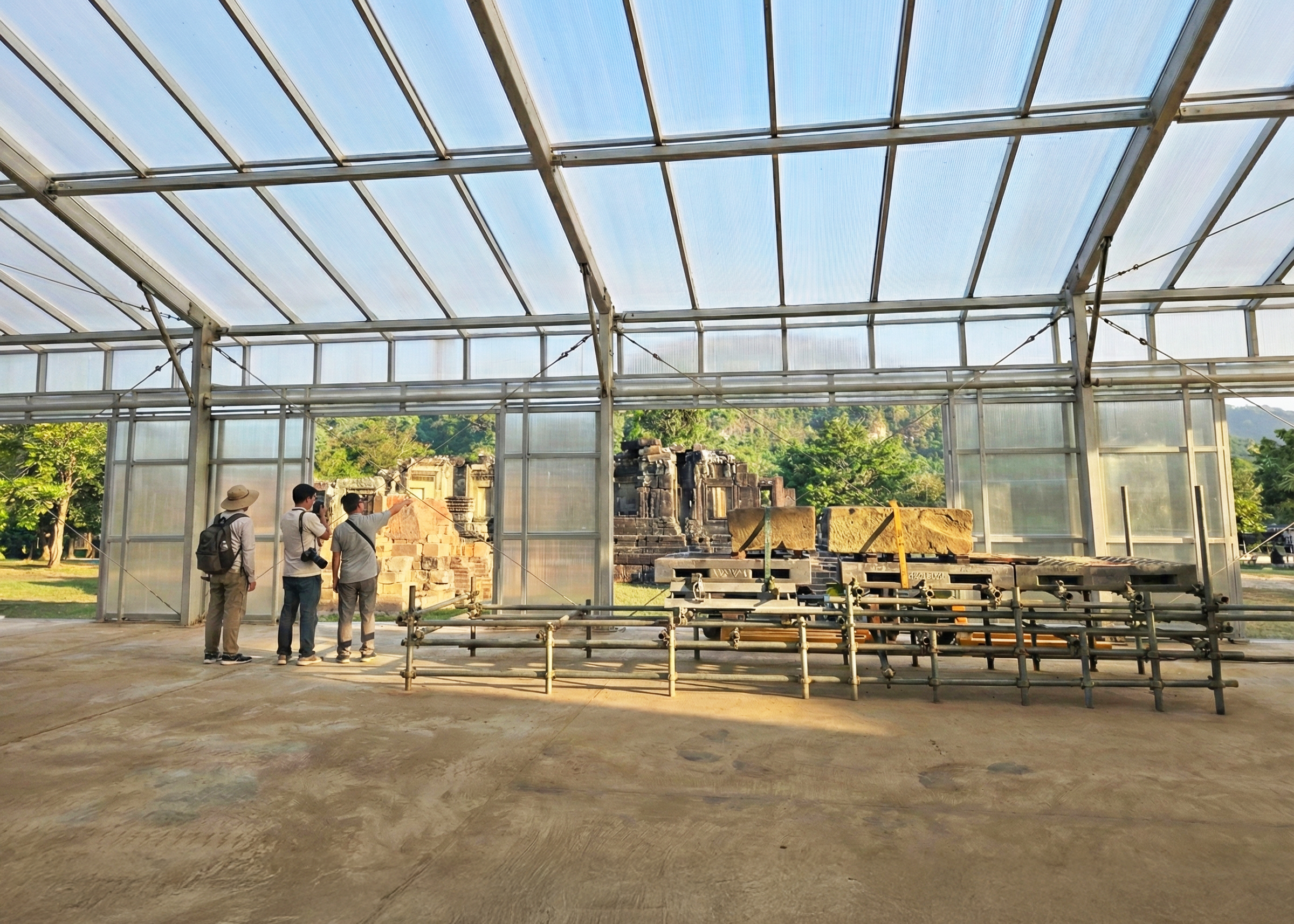
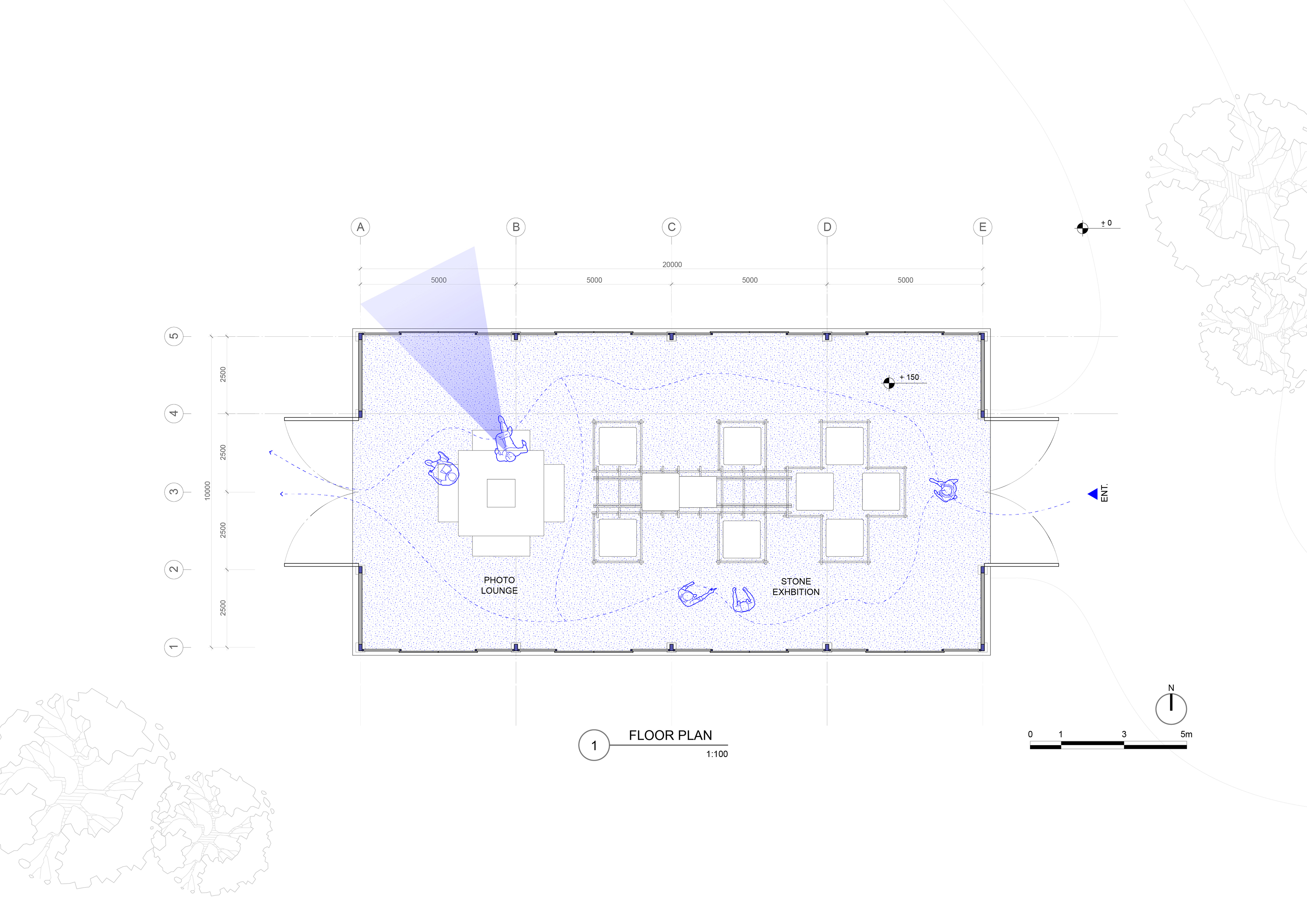
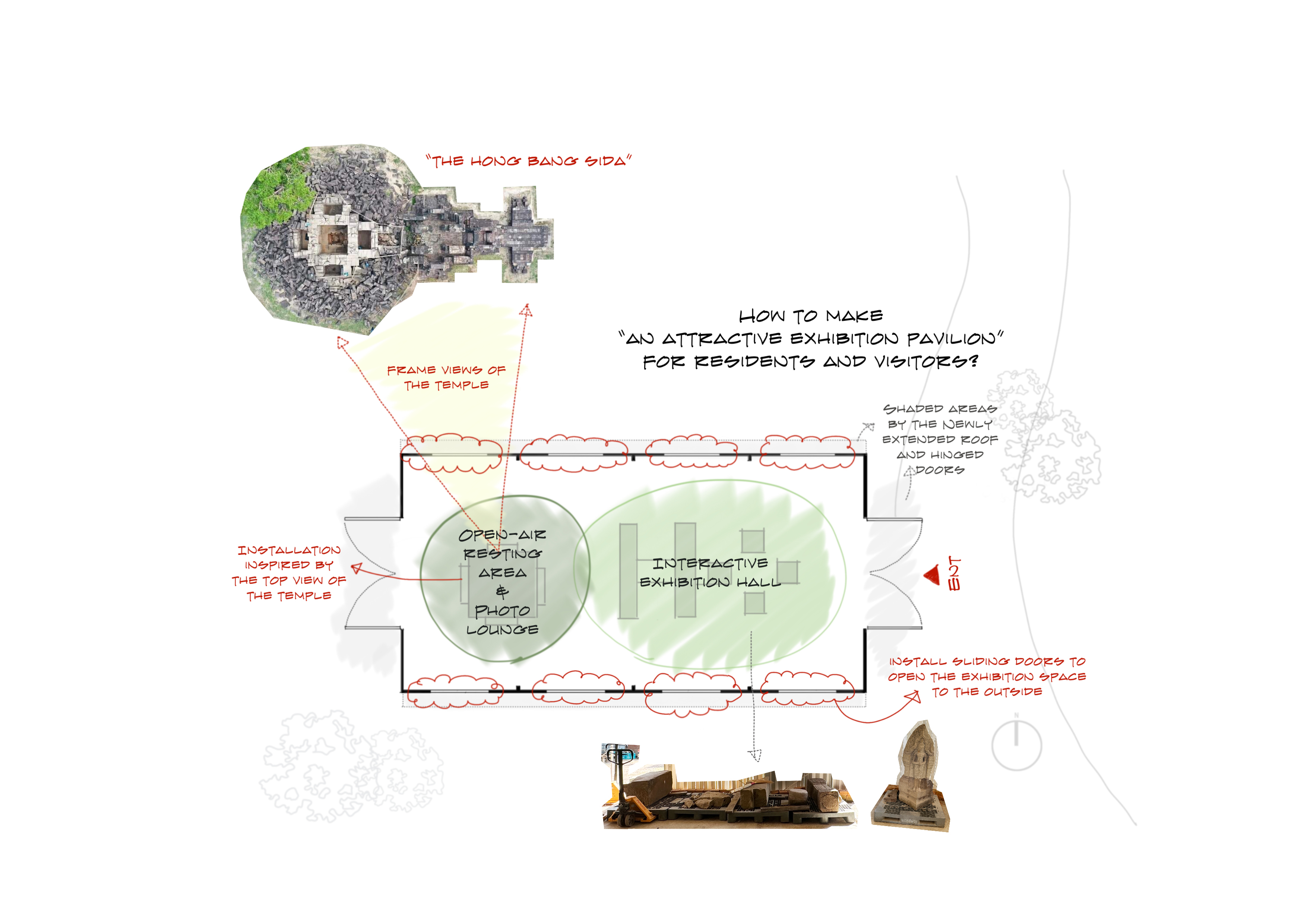
또한 전시 영역을 중앙에 집약시키고 관람 동선을 외곽으로 순환하게 함으로써, 내·외부 공간의 연계성을 강화하고 시각적 확장감을 극대화하였다. 전체적인 형태는 홍낭시다 사원의 배치 원리를 재해석하여 장소 고유의 서사를 건축적으로 구현하였으며, 사원이 조망되는 지점에는 휴식 공간을 마련하여 유적과 호흡하는 정적인 쉼을 제공하였다.
By centralizing the exhibition space and circulating visitors along the exterior, we enhanced indoor-outdoor connectivity and visual expansion. The overall design reinterprets the layout of Hong Nang Sida Temple to reflect the site’s narrative. Rest areas located at optimal viewpoints provide a static space for relaxation, allowing visitors to deeply engage with the ruins.
By centralizing the exhibition space and circulating visitors along the exterior, we enhanced indoor-outdoor connectivity and visual expansion. The overall design reinterprets the layout of Hong Nang Sida Temple to reflect the site’s narrative. Rest areas located at optimal viewpoints provide a static space for relaxation, allowing visitors to deeply engage with the ruins.
Copyright © 2026 by WASUD